The Acoustic ABCs
by

The Acoustics ABCs |
Colour Charts |
Design Charts |
Install Guides |
Spec Sheets |
a guide to improve productivity & well-being in your workplace with effective sound solutions.
Why are good acoustics so important in your workplace?
Excellent acoustics in an office lead to higher levels of productivity & improve employee well-being.
It is essential employees have a quiet space for privacy, but offices also need to have good acoustics throughout to minimise the disturbance of conversations, especially in an open-plan or co-working office.
 |
Productivity in your workplace
|
Noise is the main culprit in preventing productivity in the workplace and there will always be distractions, but this can be controlled and kept to a minimum. Plus with many businesses turning away from traditional enclosed offices to open-plan layouts (or using a co-working facility) acoustic performance is increasingly important. Architects & designers can plan a space with the help of an acoustician to reduce distractions & create privacy where needed. Improving office acoustics will increase productivity, short term memory and decrease stress.
|
 |
But how do you get great acoustics & speech privacy in your workplace?
Easy! Follow the ACOUSTIC ABCs
ABSORB
|
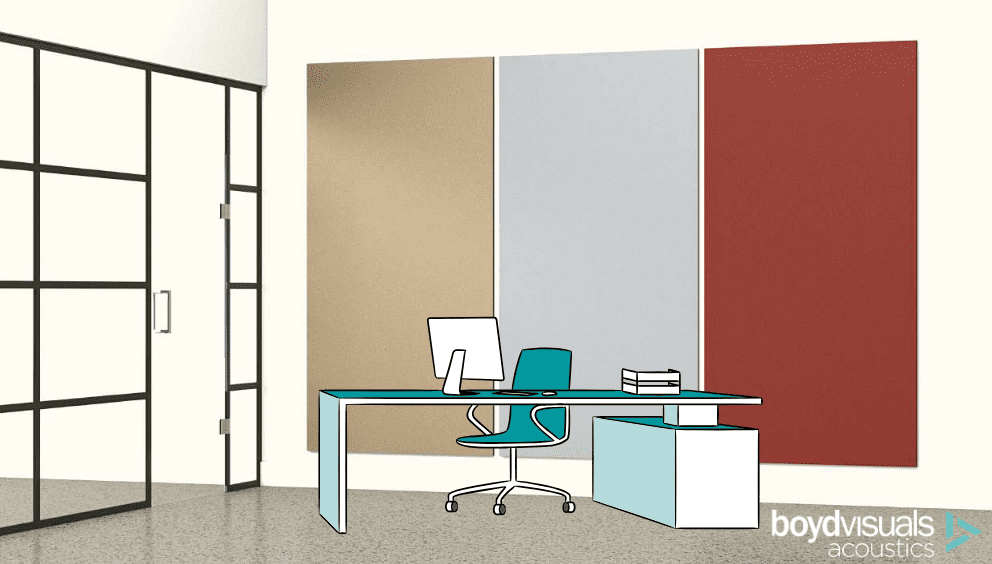
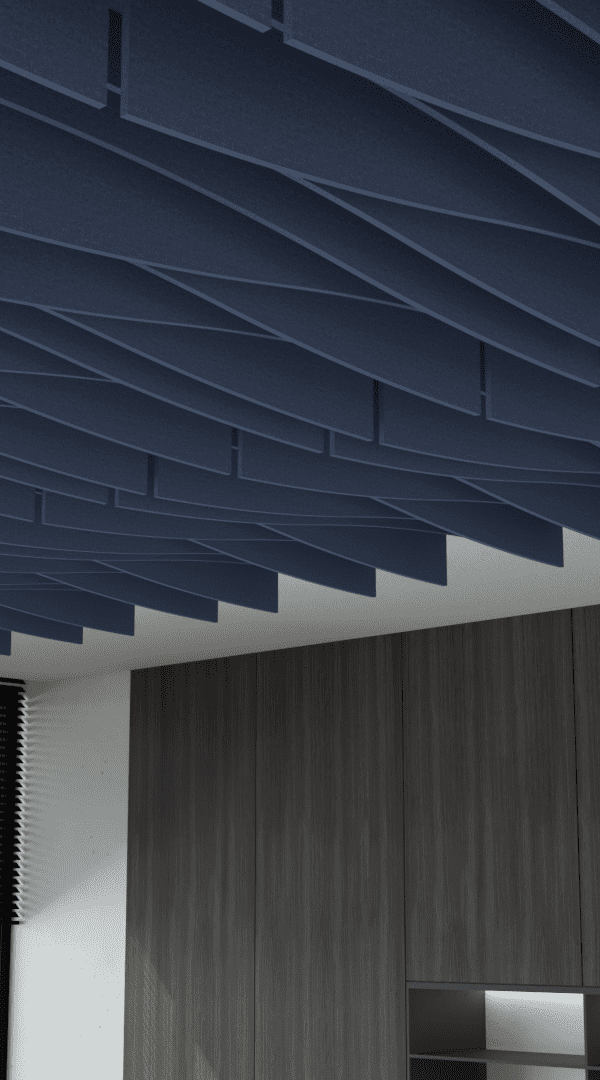
Installing specially designed acoustic products on a ceiling or wall captures reflected sound & absorbs disruptive sound energy bouncing between hard surfaces like metal, glass or concrete. Noise is the #1 problem in the workplace, so make sure you take the necessary steps to better manage disruptions & improve your workplace harmony. But how will you know if a material can effectively absorb sound energy?? Find out it's NRC rating... What's an NRC rating??Noise Reduction Coefficient is the rating from 0.0 to 1.0 of the A high rating means more sound energy is absorbed, meaning less noise is reflected back into the room. e.g. a surface with a 0.4 rating will absorb 40% of sound energy & reflect 60%. The NRC rating of a panel can even double if you leave space between the panel & the wall, that means DOUBLE the reduction in noise! |
 |
BLOCK
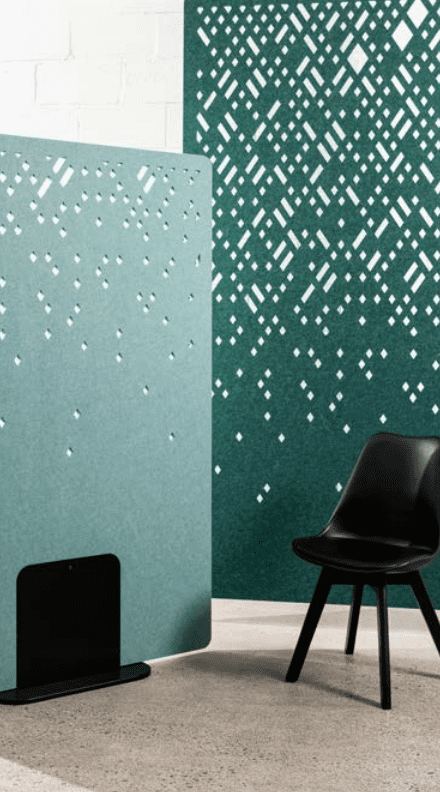 |
Use vertical barriers or partitions to reduce sound travelling & separate the noise source from potential listeners in surrounding areas. Try to maximise space between people in an office & then place barriers like furniture or half height partitions between them, this will help to control direct sound paths.
|
COVER
& mask unwanted sounds.
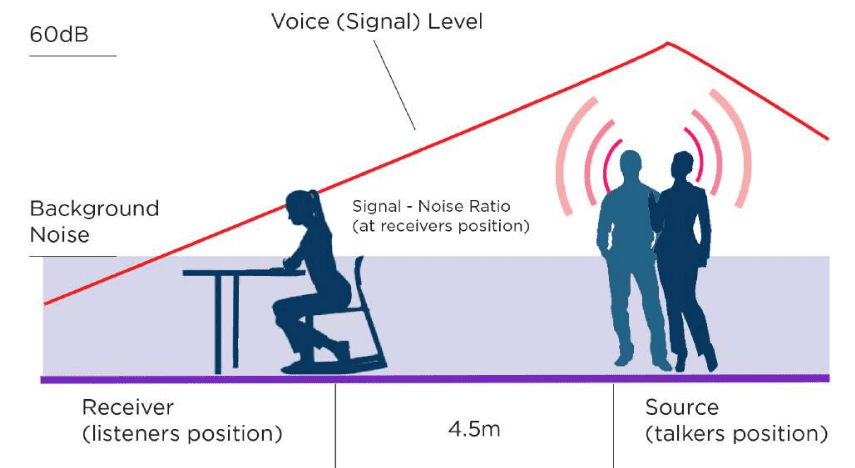
Use an electronic sound masking system to cover conversations and noise, making them harder to be heard and less distracting.
Make sure the masking system is at a consistent volume around your whole office, which isn’t noticeable while running, but the sound is missed when it is switched off.
 |
Office layout
When designing your workplace, make sure you...
- Install acoustic panels in close proximity to any hard surfaces to prevent sound bouncing.
- Ensure whiteboards aren't directly facing any windows or any hard surfaces - if the size of the office prevents this put acoustic panels either side of the board so it can absorb sound close to the source.
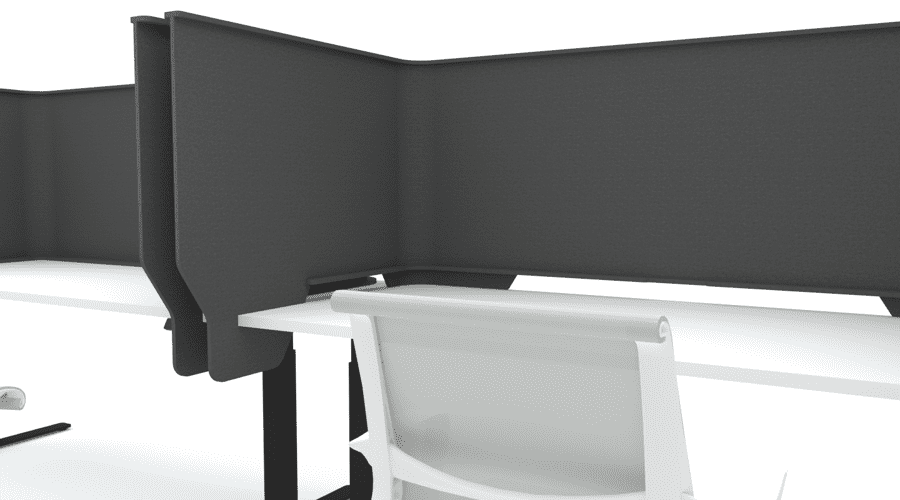
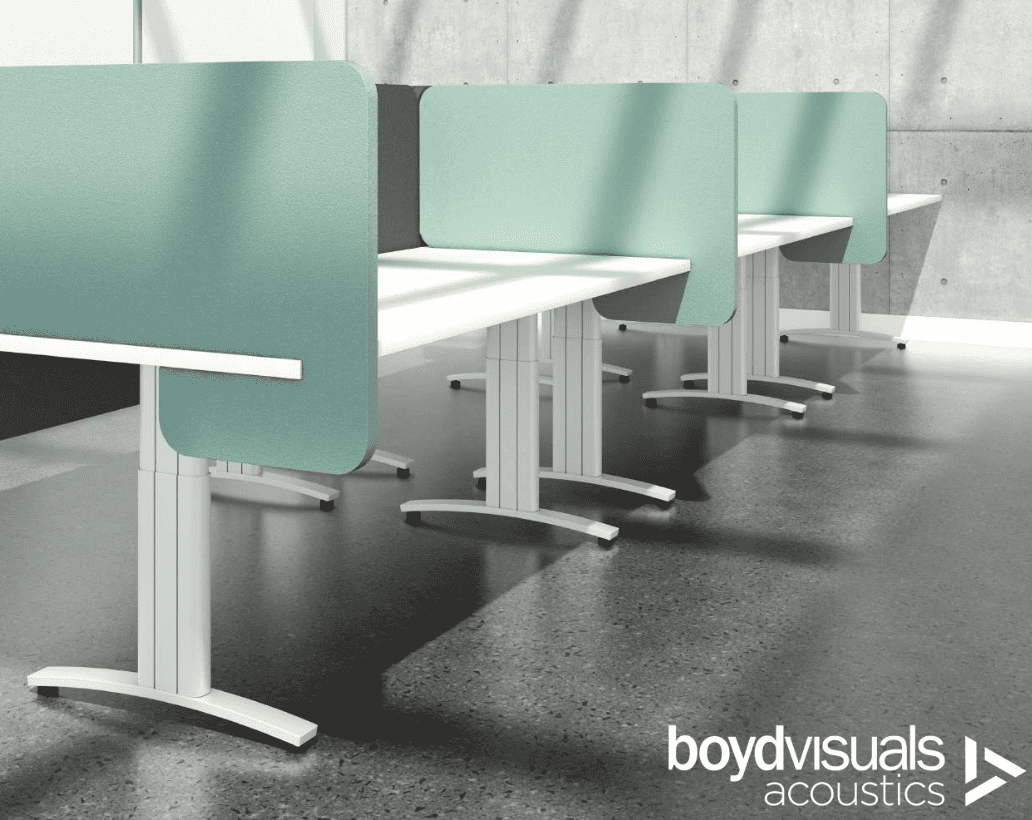
Another way to reduce conversational distractions is to ensure sound can’t travel easily between stations. You might think that higher partitions between cubicles would reduce noise a lot, but this only slightly reduces noise, and sometimes with more visual privacy people actually talk louder!
You can prevent this with a screen sitting above & below your desk, then stagger partitions to block the direct path of sound.
 |